iotaudit
iotaudit is a free, MIT-licensed command-line tool that audits the smart devices on your own network, showing where they connect and grading each from A to F.
 I
Project links
Visit productRequest correctionProject Note
A closer look at iotaudit
iotaudit is an open-source CLI that audits your own smart-home devices, listing who they phone home to, plaintext versus TLS traffic, open ports and an A to F grade in a local report.
Who are your gadgets talking to?
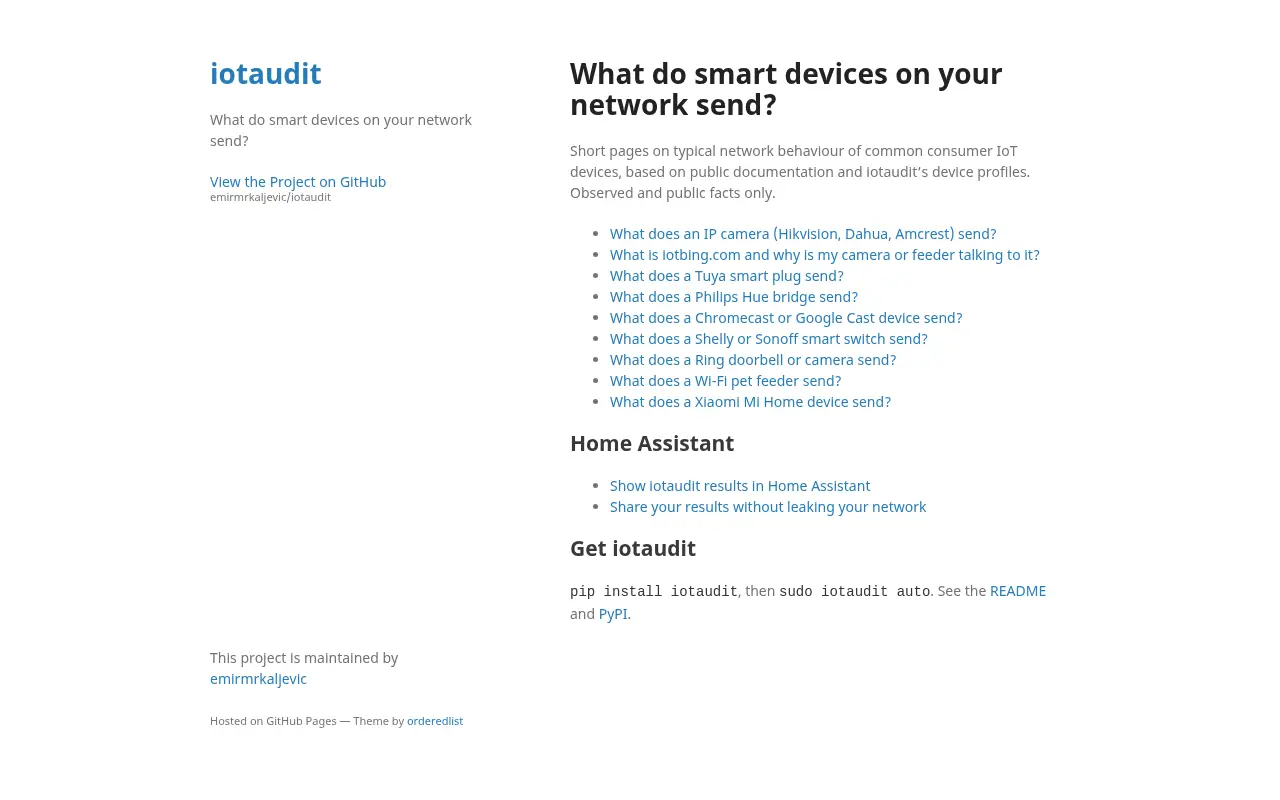
Over time a home network fills up with cameras, plugs and doorbells, and most of us have only a vague idea where any of them send data. iotaudit is a free, open-source command-line tool for finding out. You install it with pip or pipx and run sudo iotaudit auto. According to the README, that command asks for consent, audits your own network and writes an HTML report. Each device gets an A to F grade and a one-line verdict.
What ends up in the report
The report covers who a device contacts and whether that traffic was TLS or plaintext. An optional nmap scan adds open ports, with risk notes for services such as telnet, RTSP and UPnP. There are extras if you want them, including PDF output, a grade summary for Home Assistant over MQTT and an MCP server. It needs Python 3.10 or later.
The project site also has short pages on what common devices typically send, covering IP cameras, a Tuya smart plug, a Philips Hue bridge and a Ring doorbell among others. It says these are based on public documentation and the tool's own device profiles, so they make handy reading even before you run anything.
Read this before you type sudo
The README is plain about what a result means. When the tool labels a destination, that's described as a pattern match, not proof of what was sent. It's also written for your own network, and the command asks for consent before it starts. And it's early software: the README gives the status as 0.1.21, and the GitHub repository was created on October 16, 2026.
iotaudit is free and MIT-licensed. The README says everything runs locally, with no account, no telemetry and no cloud. The maintainer is the GitHub user emirmrkaljevic. It runs with sudo because it captures network traffic, so it's worth reading the README and skimming the source before you give it that access. If you're comfortable in a terminal and curious about your smart home, set aside an evening and see what grades your devices get.
Project note details
Dates and editorial links
Published
November 11, 2026
Updated
November 12, 2026
Note history
Publication and substantive update dates for this public note.
- Nov 11, 2026
- Project note published.
- Nov 12, 2026
- Project note updated.
Want to come back to iotaudit?
Save it to this browser. Your Saved list marks projects whose note or updates changed since you last looked.
Keep exploring
More like iotaudit
- EchobellDeveloper Tools · Echobell turns a webhook or an email into a phone alert, including a call that rings when a server goes down.
- usb-reaDeveloper Tools · A free, MIT-licensed command-line tool that works out a USB device's protocol from captured traffic and writes a Python driver for it.
- 2 Person Infrared SaunaWebsites · 2 Person Infrared Sauna compares two-person home infrared cabins using published specs from maker pages, manuals and listings, each sourced and dated.
- BitTool SignerMoney & Finance · BitTool Signer turns a spare phone into an offline signing device for Bitcoin, EVM networks, TRON and Solana.
- EveryPay for JoomShopping by InteroperiaDeveloper Tools · A payment plugin that adds EveryPay to JoomShopping stores and checks each result against the order.
- Pactman Nonprofit Check Plus APIDeveloper Tools · An API that returns a U.S. nonprofit's IRS status, Pub 78 listing, revocations and OFAC result from an EIN.
- NOIRADIX StudioDeveloper Tools · A free browser pixel art editor for sprite sheets and animation clips, with Unity and TexturePacker-style exports.
- Madsalt Supabase CheckerDeveloper Tools · A free, read-only scanner that checks a Supabase project against 46 security rules and gives a fix for each finding.



For the makerAdd the badge to your site
If you made iotaudit, you can post about this note with a ready-to-edit announcement, or show it on your own site with an optional badge that links back here. Neither changes the note's text or placement. This note's link to the project is marked as user-submitted until the project's site links back, for example with the badge, and is a standard link while it does.
Want to keep this note's facts current yourself? Project Radar Pro lets a verified maker confirm status, pricing and platforms in a labeled block, post one update a month and see the note's activity totals. It never changes the note's text or placement. See what Pro includes
Building something useful?
Submit your project for free. If selected, it gets a Project Note that explains what it does and links to your work. Publication isn't guaranteed.
Submit a project